


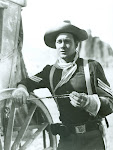


William Boyd (June 5, 1895 – September 12, 1972) was an American actor. Born William Lawrence Boyd in Hendrysburg, Ohio, located 26 miles east of Cambridge, Ohio, he was raised in Tulsa, Oklahoma. In 1918 he went to Hollywood, where he became famous as a leading man in silent film romances with a yearly salary of $100,000. He was the lead actor in Cecil B. DeMille's The Volga Boatman (1926) and in D. W. Griffith's Lady of the Pavements (1929).
By the end of the 1920s, Boyd's career had begun to deteriorate, and he was without a contract and going broke. Then Boyd's picture was mistakenly run in a newspaper story about the arrest of another actor with a similar name (William "Stage" Boyd) on gambling and liquor charges, which further hurt his career. In 1935, he was offered the lead role in the movie Hop-Along Cassidy. He changed the original pulp-fiction character, written by Clarence E. Mulford, from a whisky-guzzling wrangler to a cowboy hero who did not smoke, drink, or swear and who always let the bad guy start the fight. Boyd would be indelibly associated with the Hopalong Cassidy character, and he gained lasting fame in the Western film genre because of it. Both Clark Gable and Robert Mitchum got their first big break in movies playing villains in westerns starring Boyd. Anticipating television's rise, Boyd purchased the rights to the character of Hopalong and the 66 Hopalong Cassidy movies.[1] In 1949 he released the movies to television, where they became extremely popular and began the long-running genre of westerns on television. Along with other cowboy figures, such as Roy Rogers and Gene Autry, Boyd licensed merchandise, including such products as Hopalong Cassidy watches, cups and dishes, comic books and cowboy outfits.[1] Boyd identified with his character, often dressing as a cowboy in public,[1] and used his fame and his fortune to meet with children around the world, and underscore for them the fine qualities of the Hopalong Cassidy figure he portrayed. As a private individual and an actor, he was a hero to a generation of American children. The Hopalong Cassidy films remain available for broadcast and are on DVD in restored form. Boyd appeared as Hopalong Cassidy on the cover of numerous national magazines, such as the August 29, 1950, issue of Look [1], and the November 27, 1950 issue of Time. William Boyd died in 1972 in Laguna Beach, California, and was buried in the Forest Lawn Memorial Park Cemetery in Glendale, California. He is survived by his fifth wife, actress Grace Bradley Boyd (born 21 September 1913). For his contribution to the motion picture industry, William Boyd has a star on the Hollywood Walk of Fame at 1734 Vine Street. In 1995, he was inducted into the Western Performers Hall of Fame at the National Cowboy & Western Heritage Museum in Oklahoma City, Oklahoma. Since 1991, the Friends of Hoppy Fan Club has held the Hopalong Cassidy Festival in Cambridge, Ohio, near Boyd's home town.
By the end of the 1920s, Boyd's career had begun to deteriorate, and he was without a contract and going broke. Then Boyd's picture was mistakenly run in a newspaper story about the arrest of another actor with a similar name (William "Stage" Boyd) on gambling and liquor charges, which further hurt his career. In 1935, he was offered the lead role in the movie Hop-Along Cassidy. He changed the original pulp-fiction character, written by Clarence E. Mulford, from a whisky-guzzling wrangler to a cowboy hero who did not smoke, drink, or swear and who always let the bad guy start the fight. Boyd would be indelibly associated with the Hopalong Cassidy character, and he gained lasting fame in the Western film genre because of it. Both Clark Gable and Robert Mitchum got their first big break in movies playing villains in westerns starring Boyd. Anticipating television's rise, Boyd purchased the rights to the character of Hopalong and the 66 Hopalong Cassidy movies.[1] In 1949 he released the movies to television, where they became extremely popular and began the long-running genre of westerns on television. Along with other cowboy figures, such as Roy Rogers and Gene Autry, Boyd licensed merchandise, including such products as Hopalong Cassidy watches, cups and dishes, comic books and cowboy outfits.[1] Boyd identified with his character, often dressing as a cowboy in public,[1] and used his fame and his fortune to meet with children around the world, and underscore for them the fine qualities of the Hopalong Cassidy figure he portrayed. As a private individual and an actor, he was a hero to a generation of American children. The Hopalong Cassidy films remain available for broadcast and are on DVD in restored form. Boyd appeared as Hopalong Cassidy on the cover of numerous national magazines, such as the August 29, 1950, issue of Look [1], and the November 27, 1950 issue of Time. William Boyd died in 1972 in Laguna Beach, California, and was buried in the Forest Lawn Memorial Park Cemetery in Glendale, California. He is survived by his fifth wife, actress Grace Bradley Boyd (born 21 September 1913). For his contribution to the motion picture industry, William Boyd has a star on the Hollywood Walk of Fame at 1734 Vine Street. In 1995, he was inducted into the Western Performers Hall of Fame at the National Cowboy & Western Heritage Museum in Oklahoma City, Oklahoma. Since 1991, the Friends of Hoppy Fan Club has held the Hopalong Cassidy Festival in Cambridge, Ohio, near Boyd's home town.
(From Wikipedia)
Here’s a nice tribute to Boyd from Youtube:
Here’s a nice tribute to Boyd from Youtube:


